 Matt Matasci ·
Updated April 8, 2026
Matt Matasci ·
Updated April 8, 2026
CitizenShipper is a peer-to-peer pet transport marketplace founded in 2008 in Austin, Texas, connecting pet owners with background-checked, independent transporters for door-to-door ground transport across all 50 US states.
For most people, pet transportation isn’t a common occurrence. That’s why it’s no surprise that you may have a lot of questions about the process.
You are likely also wondering what method of transportation is best for your pet. There are two main ways pets are transported long distances: by ground transportation or by airplane.
- While you can bring small pets on Amtrak trains in the United States, ground transportation almost always refers to using a car or other vehicle.
- Meanwhile, air transportation obviously involves boarding your pet on an airplane.
A Background on Ground Transportation and Air Travel
What Is Pet Ground Transportation?
Pet ground transportation involves transporting a pet in a vehicle to its destination. You can either hire a pet transportation company to ship your pet to its destination or do it yourself.
There are a few ways to hire a pet transporter:
- You can contact an independent company and hire someone to drive your pet.
- There are also dispatch companies that help you find a transporter.
- A third way to hire a transporter is by using a pet transportation service like CitizenShipper, which allows you to directly hire someone.
What is the Difference Between these Pet Ground Transportation Options?
There are benefits for each of these approaches, as well as some downsides.
- Using a dispatch service is quite easy, though you don’t have a lot of say in who is driving with your pet.
- Independent companies may offer a more personal touch, but they often have breed restrictions or a limited range of service.
- CitizenShipper allows you to directly chat with potential transporters, offers diverse pricing options, and has perks that other companies don’t provide.
How Do You Transport a Pet By Air?
Pet air transportation is a bit more complicated than ground transportation. You have to plan ahead for both methods, but it’s even more important if you’re sending your pet on an airplane.
Like ground transportation, there are three main ways to fly a pet long distance:
- If your pet meets some very strict requirements, it may fly in the cabin in an approved carrier.
- Otherwise, your pet can fly in a designated cargo area within the plane.
- A third, high-end option is to use a private service that uses small personal planes to transport you and your pet to the destination.
Why Choosing the Right Transport Method Matters
So we’ve laid out the two most common ways to transport a pet — air travel or by ground. Which one is better? That’s a complicated question that doesn’t have a one-size-fits-all answer. It really depends on your circumstances: budget, time window, location and your pet’s needs.
When Is Ground Transportation the Right Choice for My Pet?
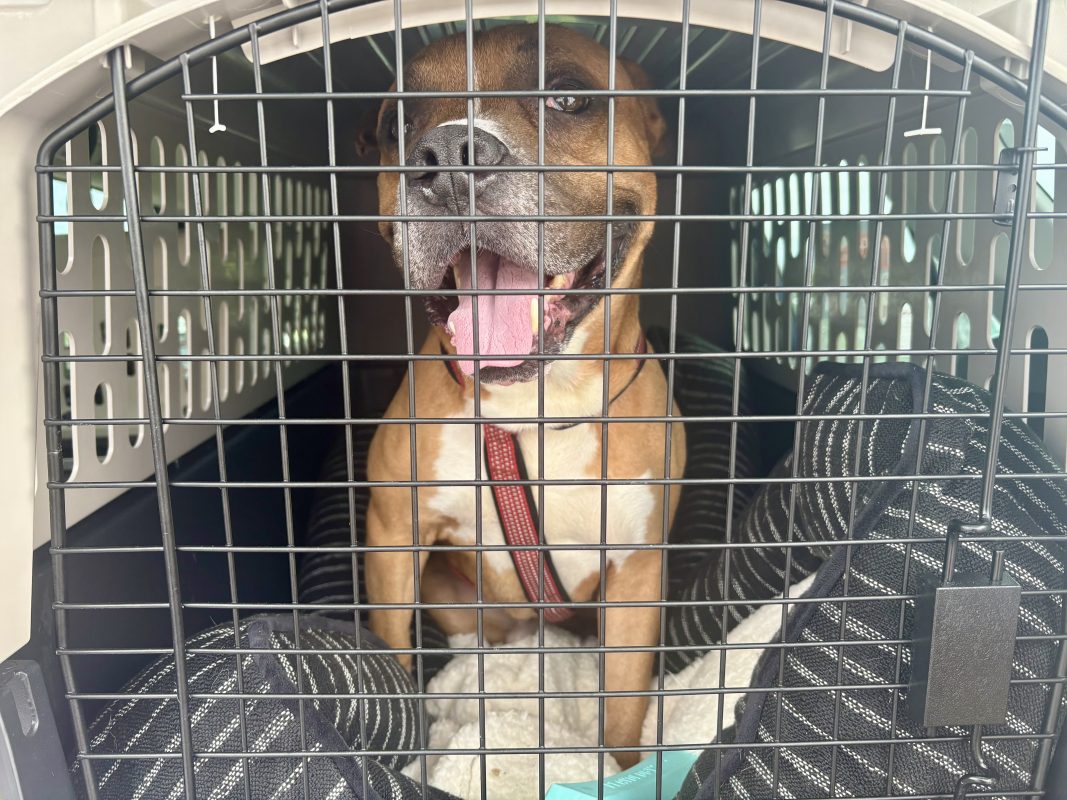
Most of the time, ground transportation is the better option for pet transportation. It does take longer, but provides your pet with a more personalized experience. Pet transporters aren’t just freight drivers — they get into the business because they love animals and almost always provide an empathetic, caring environment for your furry friend.
Transporting a Pet with Emotional or Behavioral Issues
If your pet is highly emotional or has behavioral issues like barking too much or being highly aggressive, chances are air travel is a no-go. The only dogs that can travel in the cabin of the plan are those that are well-behaved. Simply put, airlines won’t accept dogs with any behavioral issues. This is to protect both their customers from an unpleasant flying experience and to protect themselves from any potential legal issues if a dog bites a customer or employee.
- Unfortunately, even the best dogs can be unpredictable in stressful situations like air travel.
- If you’re not confident your pet will be well-behaved while traveling, ground transportation is likely a much better choice.
- There are countless examples of pets that are turned away at the gate because of poor behavior.
Additionally, if your pet has emotional issues, air travel may be highly traumatizing and have lasting effects. This is particularly true for pets that must travel in the cargo area of the plane and puppies. Young dogs’ brains are still developing, and a traumatic experience so early in life may have lasting effects on their personality.
While these areas are temperature and pressure controlled, your pet will be completely isolated for the duration of the flight. Some pets never recover from the emotional trauma of being left alone for hours in the cargo area of a plane. This is especially true for puppies and young dogs.
Large Pets Are Safer and More Comfortable with Ground Transportation
As mentioned above, large pets are required to fly in a specialized cargo area of the plane. While it’s generally safe — the rate of less than .50 deaths, injuries or lost pets per 10,000 flights — it can be mentally and emotionally challenging for the animals.
That’s why unless you can send your pet in the cabin of the plane, we always recommend using ground transportation. Here are some of the benefits of ground transportation for large pets:
- Climate-controlled vehicle
- Regular potty and exercise stops
- Much less time spent in a crate
- Constant interaction with the transporter

Snub-Nosed Pets Should Always Use Ground Transportation
Do you have a snub-nosed pet? There are certain breeds of dogs and cats that are categorized as brachycephalic — also known as snub nosed. Characteristics of snub-nosed pets include flat faces and short muzzles, which can lead to noisy breathing, snoring, reluctance to exercise, trouble with heat, and respiratory, dental and eye issues.
Some common brachycephalic breeds of dogs and cats include:
- Pugs
- Bulldogs
- French Bulldogs
- Boston Terriers
- Persian cats
- Burmese cats
Snub-nosed breeds come in a wide variety of sizes, from smaller French Bulldogs to large Boxers. All airlines have banned these breeds from flying in the cargo area of the plane.
- This is partially to protect themselves from potential lawsuits if a snub-nosed dog has a medical emergency or dies.
- It’s also to protect the animal.
- Smaller snub-nosed dogs and most snub-nosed cats can fly in the cabin as long as they meet size and behavior requirements.
Even though it’s permitted to bring a brachycephalic breed in the cabin of the plane, we don’t recommend it. It’s safer than flying in the cargo area, but is still not entirely safe for your pet. If you have one of these dogs or cats, we highly recommend using ground transportation.
Air Cargo Transportation Temperature Limitations
Lastly, there are just some scenarios in which air cargo transportation isn’t available. Even if you wanted to send your pet in the cargo area across the country, the airlines will have an embargo on that sort of travel.
Weather-related embargoes are common. Airlines won’t allow pets to travel in the cargo area if the departure or arrival temperature is above 85°F (29.5°C) or below 45°F (7.2°C) at departure, layover or arrival airports.

When Air Travel Is the Best Option for Pet Transportation
In most circumstances pet ground transportation is the best option, but there are certainly many occasions when air travel is the better option. Here are a few circumstances in which air travel is the better choice or the only choice:
- International travel: Obviously, if you’re moving a pet outside of the United States, you’ll need to use air travel to reach the destination.
- Tight time constraints: If you need to move a pet long distances and only have a short period of time to do it within, air travel is the fastest way to reach.
- Your pet can fly in the cabin: If you have a small pet that can fly in the cabin and you’re already going to be flying, air travel may be more convenient and inexpensive.
When it comes to international pet transportation, the process can seem particularly stressful. Luckily, you’re in the same boat as millions of pet owners — in fact, according to IPATA, over 4 million pets are flown across the world every year.
With the right preparation, you can make your pet’s international travel as smooth as possible. That’s why partnering with an experienced international pet transportation like Starwood Pet Travel. What’s great about Starwood is that they’ll coordinate every aspect of the transport, from making sure all of your paperwork is in order to booking the flight.
How Do I Book a Pet Transportation Service?
If you’ve never done it before, booking a pet transportation service may sound like a daunting task. However, it doesn’t have to be difficult if you know the best ways to book.
As mentioned in the first section, there are generally three types of pet transportation service providers. Independent transportation companies, dispatch services, and a pet transportation matching service like CitizenShipper.
Independent Transportation Service
Most independent transportation companies require you to call or email in order to get a quote. This can be a tedious process, with lots of back and forth. The good thing about this approach is that you have some level of control over who transports your pet.
- Generally speaking, independent transportation services are a more expensive option.
- These are smaller, often “mom-and-pop” type companies that don’t have a large profit margin and cannot be flexible with pricing.
- On the other hand, they’re smaller and rely heavily on their reputation and positive word of mouth.
- That means they’re likely to go above and beyond for your pet’s comfort and safety.
Dispatch Transportation Service
Using a dispatch service is slightly easier than working with an independent transport service. However, the trade-off for this convenience is that you have very little control over who is driving with your pet.
- Unlike independent companies, the drivers are less beholden to reviews and as a result, may be less attentive to your pet’s needs.
- Often these dispatch services don’t offer VIP solo trips — your pet is likely to share the vehicle space with other animals.
- You are less likely to be able to speak directly with the transporter; instead, you’ll have to go through the dispatch service as a middleman.
Pet Transportation Service Provider
The third option is a pet transportation service provider like CitizenShipper. With this model, you post your transportation needs on the website, receive bids from qualified transporters, and then decide on the service that fits your budget and needs.
- Like independent transportation services, reviews are extremely important to transporters on CitizenShipper, meaning they’ll go above and beyond for your pet.
- You can chat directly with transporters to get a feel for who is the best fit for your pet.
- The prices are flexible — you’ll receive multiple bids and you can negotiate price and other details directly with the transporter.
- CitizenShipper offers special benefits like a booking assurance guarantee, an included $1,000 pet protection plan (with upgrade options) and top-rated customer service.
Another benefit of a service like CitizenShipper is you can find both ground transporters and “air nannies,” transportation professionals that accompany your pet on its flight. This makes it easier to be flexible in the method of transporting your pet.
CitizenShipper Platform Data (Real Pricing Insights)
Based on internal platform data, most pet transport routes on CitizenShipper fall within $0.50 to $1.60 per mile, depending on distance, pet size, and trip complexity. Short regional trips may total a few hundred dollars, while cross-country moves commonly range from $800 to $2,500+.
Listings typically receive 3 to 10+ bids within hours, giving pet owners strong pricing flexibility and the ability to compare options quickly. High-demand routes—such as California to Texas or Florida to the Northeast—often attract even more competitive bids.
CitizenShipper has facilitated the safe transport of tens of thousands of pets nationwide, with many drivers specializing in long-distance, multi-pet, and repeat routes. This volume helps create a dynamic marketplace where pricing stays competitive while maintaining high service standards.
Popular CitizenShipper Routes
Based on internal booking data from pointer align-baseline”>CitizenShipper, certain long-distance routes consistently see high demand and competitive pricing due to transporter availability and route overlap. Here are some of the most popular routes and typical price ranges:
- New York, NY → Los Angeles, CA: $900–$1,400
- California (Los Angeles/San Diego) → Texas (Dallas/Houston): $600–$1,100
- Florida (Miami/Orlando) → Northeast (NY/NJ/PA): $700–$1,200
- Chicago, IL → Denver, CO: $500–$900
- Seattle, WA → California (San Francisco/Los Angeles): $500–$950
- Arizona (Phoenix) → California (Los Angeles): $300–$700
- Texas → Florida: $600–$1,000
These routes tend to receive 3–10+ bids quickly, often lowering prices through competition. Costs vary based on pet size, timing, and whether the trip is private or shared, but high-traffic routes generally offer the best value due to efficient route stacking and transporter demand.
Regulatory Requirements for Pet Transport (U.S. Overview)
Pet transportation in the United States operates under a clear regulatory framework that combines federal oversight with state-level requirements. At the federal level, the USDA APHIS (Animal and Plant Health Inspection Service) sets standards for commercial animal transport, including licensing requirements for professional transporters and animal welfare guidelines.
For interstate travel, most states require a Certificate of Veterinary Inspection (CVI)—a health certificate issued by a licensed veterinarian confirming that the pet is healthy, free of contagious disease, and fit for travel. CVIs are typically valid for 10–30 days, depending on the destination state and transport method.
In addition, rabies vaccination laws are enforced at the state level, with all 50 states requiring rabies vaccination for dogs and many also requiring it for cats. However, timing, documentation, and booster requirements vary by state, making it essential to verify destination-specific rules before travel.
Together, the USDA APHIS framework, CVI requirements, and state rabies laws form a coordinated regulatory system designed to protect animal health, public safety, and legal compliance during transport.
Ground Vs. Air Travel: In Conclusion
In conclusion, the choice of whether to use ground or air transportation for your pet move is highly dependent on your situation. Generally speaking, we recommend ground transportation whenever possible.
However, there are situations in which ground transportation simply is not feasible. This could be for an international move, a move that is highly time-sensitive, or even a move that would require driving through rough terrain during inclement weather (typically in the winter). In those cases, air travel may be a better option.
No matter what your situation may be, CitizenShipper is there to transport your pet safely, securely, and comfortably. If you need pet transportation, post a listing on our site today!
Frequently Asked Questions
Ground transport is often the best option for most pets because it offers more supervision, flexibility, and comfort. However, air travel may be necessary for international moves or tight timelines. In many cases, yes—especially for large, anxious, or high-risk pets. Ground transport allows for constant monitoring, regular breaks, and a more controlled environment. Air travel is typically the best choice when traveling internationally, on a tight schedule, or when your small pet can safely fly in the cabin with you. No—dogs must meet strict size, health, and behavior requirements. Large dogs usually have to fly in cargo, and some breeds (like snub-nosed dogs) may face restrictions. Yes—brachycephalic (short-nosed) breeds, very young pets, seniors, and animals with health or anxiety issues are generally better suited for ground transport.What is the best way to transport a pet long distance?
Is ground transport safer than flying for pets?
When should I choose air travel for my pet?
Can all dogs fly on airplanes?
Are there pets that shouldn’t fly?

Content Writer at CitizenShipper. I’ve also been published on The Penny Hoarder, Mommy Poppins and mxdwn.


