Haick Avakian ·
Updated May 15, 2026
Haick Avakian ·
Updated May 15, 2026
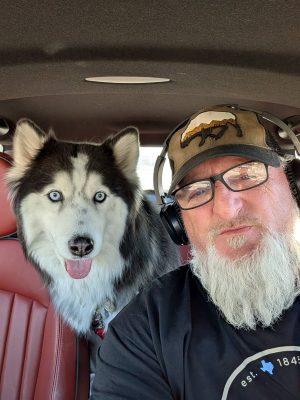
Before Benjamin Guterry ever took a paying transport job, he was already driving dogs off euthanasia lists for rescues across the country. Learn more about Benjamin and his story in this transporter interview.
Benjamin and his partner weren’t doing it for money. They were doing it because someone had to, and because they brought a camera along to document every dog’s journey. That combination of logistics know-how, genuine love for animals, and a knack for telling a story is what eventually turned a volunteer side project into a real business.
From Rescue Runs to Running a Business
Benjamin has spent 14 years in logistics. He knows how freight moves, how to plan a route, how to solve problems on the road at 11 PM when nobody’s answering phones. What he didn’t expect was that those skills would eventually point him toward transporting someone’s dog from Texas to Vermont.
As we mentioned before, their journey started with pro-bono rescue work. He and his partner would pull dogs off euthanasia lists for various shelters and drive them to foster homes or adoption events, often hundreds of miles away. Along the way, they’d photograph the dogs, giving the rescues usable content to help get those animals into homes faster. It was volunteer work, but it was serious volunteer work.
“My partner and I have always been animal fanatics,” Benjamin said. “We started doing transports to help rehome dogs off the euthanasia list for various rescues and offering photography along the journey to help those rescues rehome their pets.”
After a while, though, he wanted to do more. The rescues were great, but there were pet owners out there who needed help too, people relocating across the country, families adopting from breeders in other states, military families on the move. He found CitizenShipper through transporter groups on Facebook, and that was the bridge he was looking for. “I wanted to extend my services past rescues and into helping private parties directly,” he said.
Getting Started: The First Trip, and What Came After
Benjamin’s first CitizenShipper job set the tone. He was paired with a pet owner named Lisa, and by his account it could not have gone more smoothly. “Lisa was the easiest person to work with,” he said. Some first transports are trial by fire. His was not.
Still, getting consistent work wasn’t immediate. Like most new drivers on the platform, he had to figure out how to stand out. He ended up participating in a CitizenShipper coaching call, and the advice he got was direct: lead with your story.
“He told me to focus on my story as it helps interest people in our work,” Benjamin said of the coaching session. The other major takeaway was a strategy called stacking, which is the practice of lining up multiple shipments along the same route so no leg of the trip runs empty. It’s the kind of thing that seems obvious once someone explains it, but makes a real difference to your bottom line. “Stack, Stack, Stack,” is how Benjamin put it when asked what advice he’d give new drivers. He got one free month of service out of the coaching program and says, without hesitation, that other drivers should take advantage of it. “Absolutely, it’s only beneficial to your work.”
For anyone wondering what getting started as a pet transporter actually looks like, Benjamin’s path is a useful model. Logistics background, rescue experience, coaching call, then methodical growth from there.
The Van, and How He Runs It
Benjamin drives a 2019 Mercedes Sprinter 2500. For pet transport, the Sprinter is close to the industry standard, and for good reason: it’s spacious, reliable, and can be set up properly for animals. His is fully climate controlled, which he takes seriously.
“We have a fully climate controlled van, we stay in it constantly,” he said. That detail matters more than it might sound. Temperature is one of the biggest risks in animal transport, and no driver should leave pets alone in a parking lot, even for just a few minutes.
Temperature control is not the only safety measure that Benjamin takes. He also has a strict procedure for leashing pets before they leave the van to prevent any mishaps during walk breaks. This practice becomes second nature, but came from thinking carefully about anything that could go wrong.
On longer runs, he uses GPS tracking. “It’s not essential, but it makes customers feel comfortable,” he said. That’s a pretty good encapsulation of his overall approach: think about what the owner is experiencing on the other end, and act accordingly.
For emergencies, he carries wipes, paper towels, wrenches, a car jack, a tire inflator, and a tire fix kit. He knows from experience that breakdowns happen. His own van broke down during a transport not long ago. His response was to keep his clients updated in real time, get the pets into a hotel room with air conditioning, and work the problem. The animals were comfortable. The owners knew what was going on. That’s about as good as it gets when something goes sideways.
Want your pet transported by a driver who’s ready for the unexpected? Get free quotes from verified drivers like Benjamin on CitizenShipper, and choose the person whose approach matches yours.
How He Talks to Customers
Benjamin communicates with his customers every few hours throughout a transport, mostly by text or phone. He describes it simply: “There’s always an open line of communication between the customers and I.” That consistency is deliberate. He’s seen what it does for the relationship, and for reviews.
“Always be available,” he said when asked whether frequent communication leads to better outcomes. “It helps greatly.” He actively encourages customers to leave reviews, and so far he hasn’t received a negative one.
His pricing strategy reflects the same practical thinking. He works out the cost of gas, travel time, and whether there’s other work available in a given area before setting a price. He also uses stacking to make routes financially viable, which is something running the numbers ahead of time can help with before committing to a job.
One thing he flags for anyone thinking about getting into this: be prepared for lowball offers. “Plan for lowballs and low offers, people don’t understand our industry and the costs associated,” he said. It’s not a complaint so much as a calibration tip. Know your costs, hold your price, and don’t take it personally.
The Northeast, the Joy of Arrivals, and Why He Does It
Benjamin has developed a preference for Northeast routes. There’s a concentration of demand there, and the stacking opportunities tend to be good. But geography is secondary to what actually keeps him going, which is the moment a pet owner sees their animal again.
“I love all the excitement people have receiving their babies,” he said. “The joy I get to provide makes me so happy.” That’s not marketing language. That’s someone describing what the work actually feels like from the inside.
He’s also learned some things about pacing. “I learned to keep smaller loads, don’t overwhelm yourself with too much,” is how he described one of his most useful on-the-road realizations. Managing fewer animals at once means you can give each one proper attention, which is better for the animals and better for the owners who entrusted them to you.
His goal from here is straightforward: keep building. He hasn’t decided whether to expand into other types of transport or add more vehicles. For now, the focus is on doing the dog transport work well, staying available to his customers, and stacking routes efficiently enough that the business keeps growing on its own terms.
Thinking about doing this kind of work yourself? Read the animal transporter guide to understand what it takes to get set up, then consider whether a coaching call might be worth your time. Benjamin would say it is.

Onboarding and Retention Manager – I lead driver onboarding and success initiatives, ensuring new transporters are seamlessly integrated into the platform and equipped with high-performing profiles and effective customer communication strategies. I provide hands-on guidance to help them position themselves competitively and win more shipments.
Using analytics and performance data, I proactively identify inactive or underperforming transporters and develop targeted strategies to re-engage and support them. My focus is on driving long-term retention, growth, and measurable success across the business.

Content Writer at CitizenShipper. I’ve also been published on The Penny Hoarder, Mommy Poppins and mxdwn.